
Temperature
Create a monitored warm-to-cool gradient matched to the species.
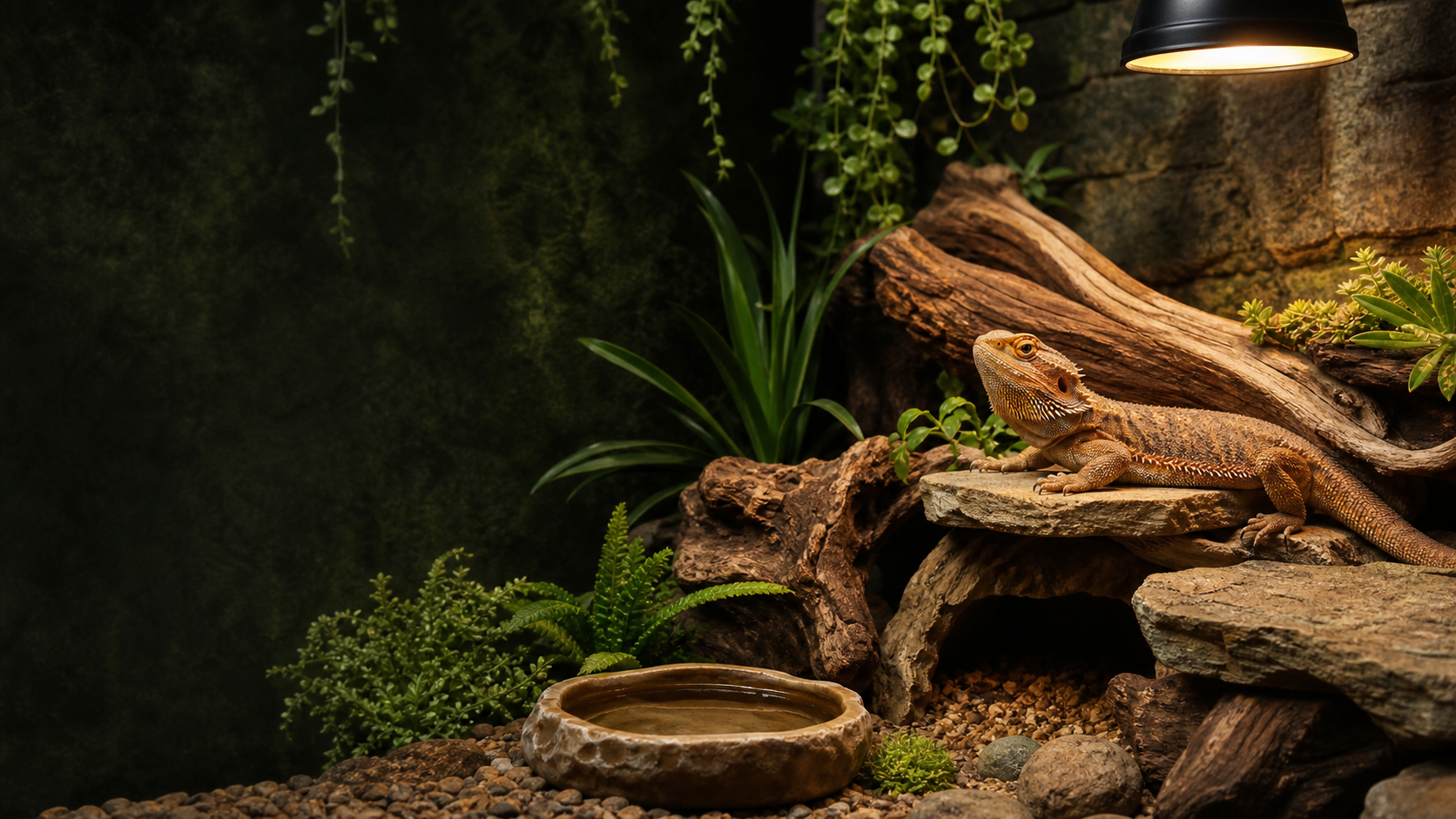
Responsible reptile ownership
The foundation of responsible care
Every healthy reptile starts with a species-appropriate environment, reliable routines, and a keeper who knows what to watch.
The care system
Temperature, light, humidity, shelter, and nutrition are connected. A change in one can affect digestion, behavior, hydration, and long-term health.
Create a monitored warm-to-cool gradient matched to the species.
Choose a day/night cycle and UVB plan based on current species guidance.
Measure it in the enclosure and adjust ventilation, moisture, and substrate together.
Provide safe hides and visual cover so the animal can rest and regulate stress.
Match food type, portion, supplementation, and schedule to the individual.
Track appetite, weight, sheds, waste, behavior, and environmental readings.
See the care system
These scenes connect the written guidance to the spaces, routines, and observations that responsible care requires.
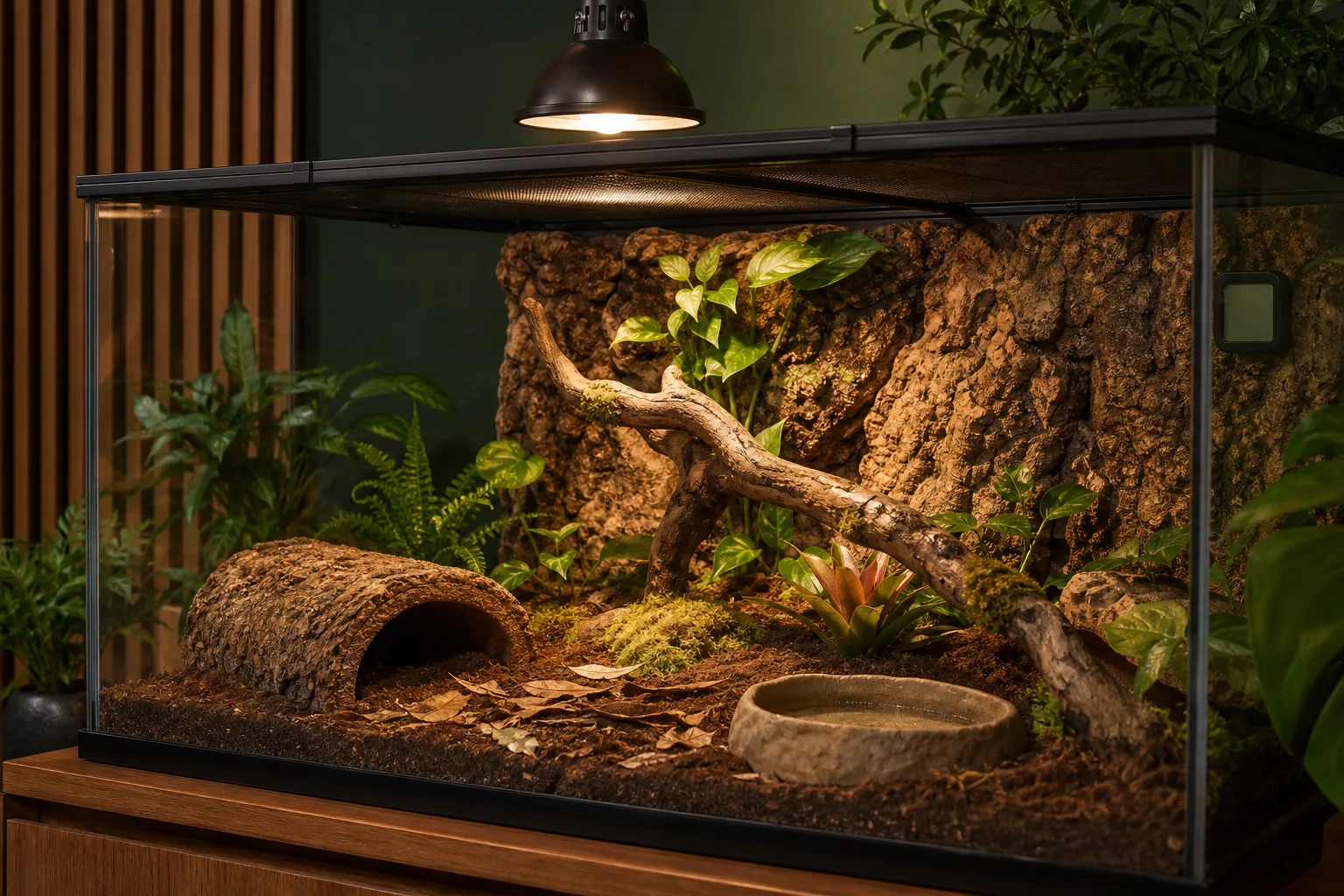
Stabilize heat, light, humidity, shelter, and monitoring before the first day of care.
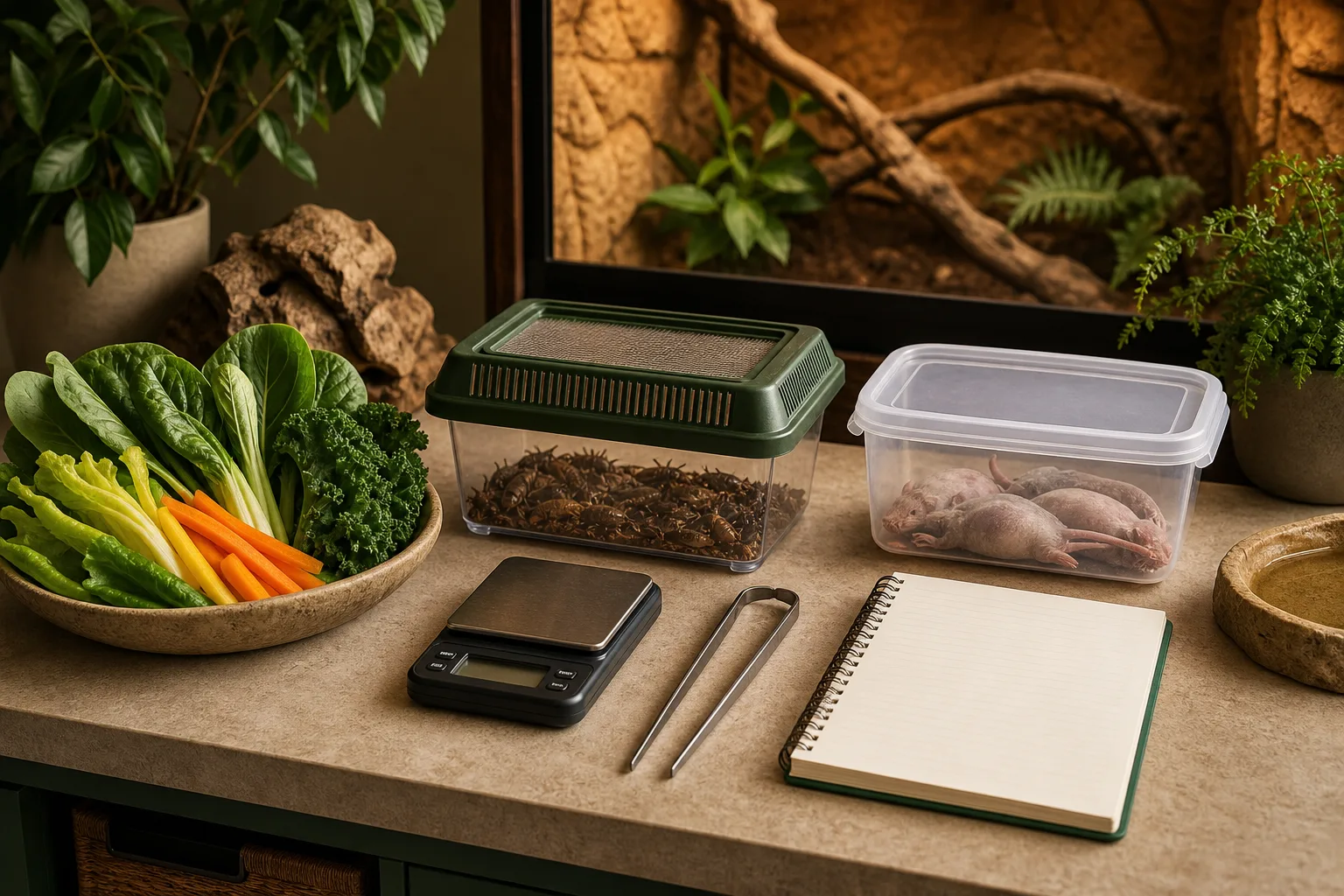
Organize food, tools, and records around the exact species and life stage.
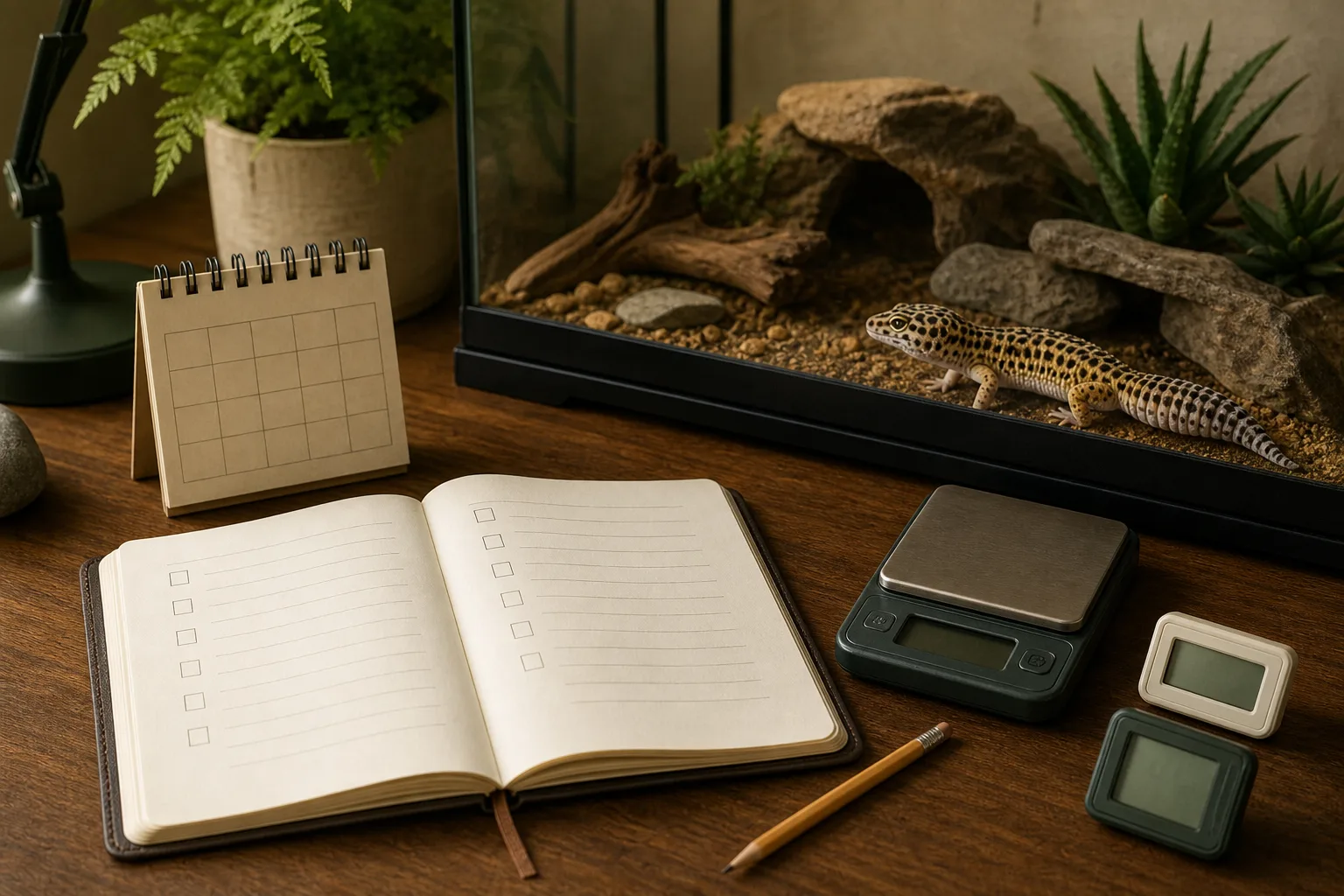
A simple written baseline makes small changes easier to recognize and discuss.
Put the plan on paper
Use this as a planning conversation, then refine it with reviewed guidance for the exact animal.
A responsible reminder
The ranges shown in general guides are starting points, not prescriptions. Confirm current guidance for the exact species, age, health, and enclosure.