
Daily observation
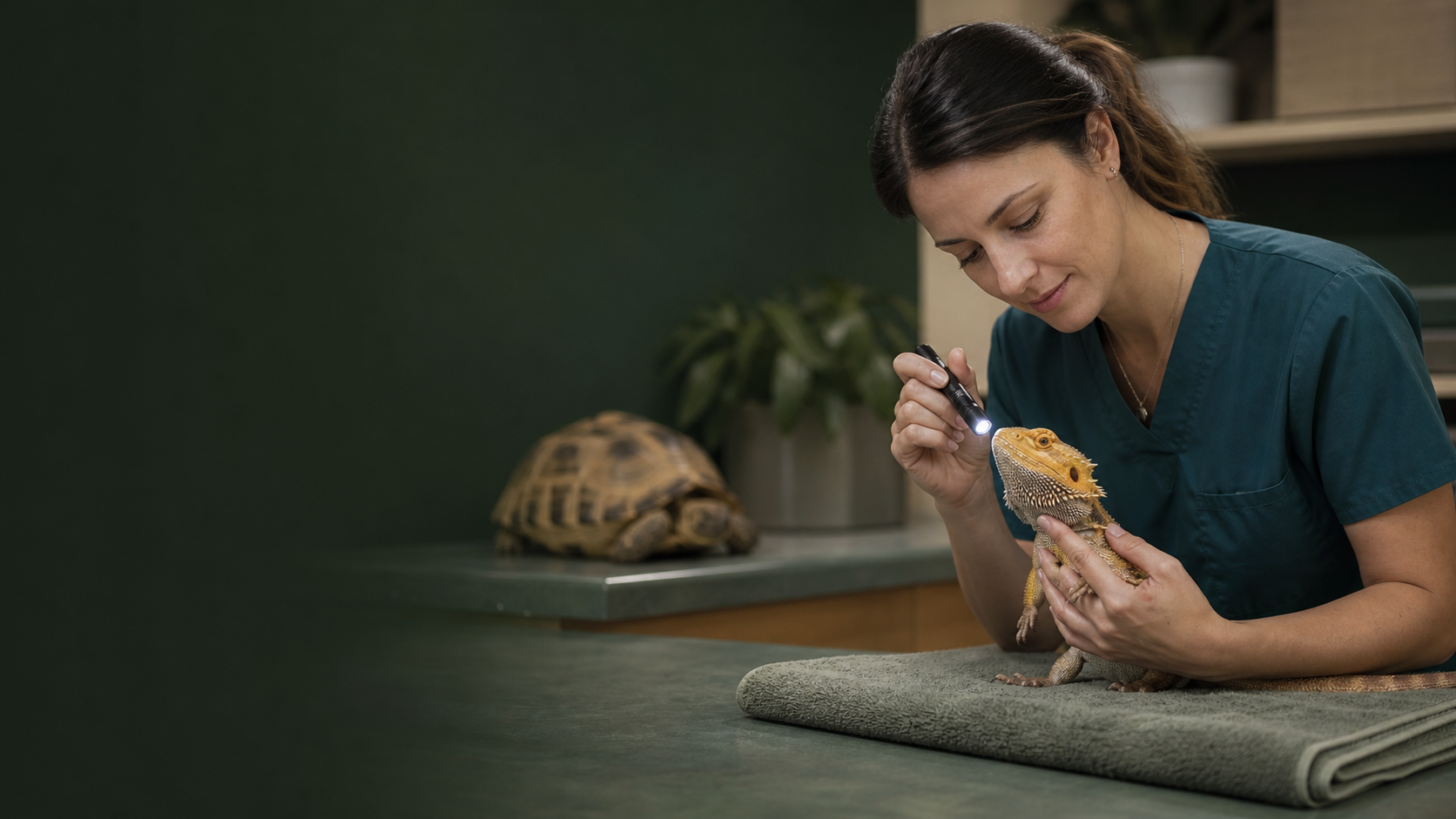
Notice activity, posture, breathing, appetite, hydration, and interaction with the habitat.
Responsible reptile ownership
Prepare before there is a problem
Know your reptile’s normal, keep useful records, and establish a relationship with an experienced veterinarian before urgent care is needed.
The care system
Reptiles can mask illness. Changes in behavior, posture, breathing, appetite, waste, weight, skin, shell, or shedding deserve attention.
Notice activity, posture, breathing, appetite, hydration, and interaction with the habitat.
Use regular weights and notes to recognize change earlier.
Identify routine and emergency veterinary options before you need them.
Prepare a secure, temperature-aware carrier and a concise care history.
Bring habitat readings, diet, supplements, recent changes, photos, and weight history.
Breathing difficulty, severe trauma, collapse, neurologic signs, or major burns require prompt professional help.
See the care system
These scenes connect the written guidance to the spaces, routines, and observations that responsible care requires.
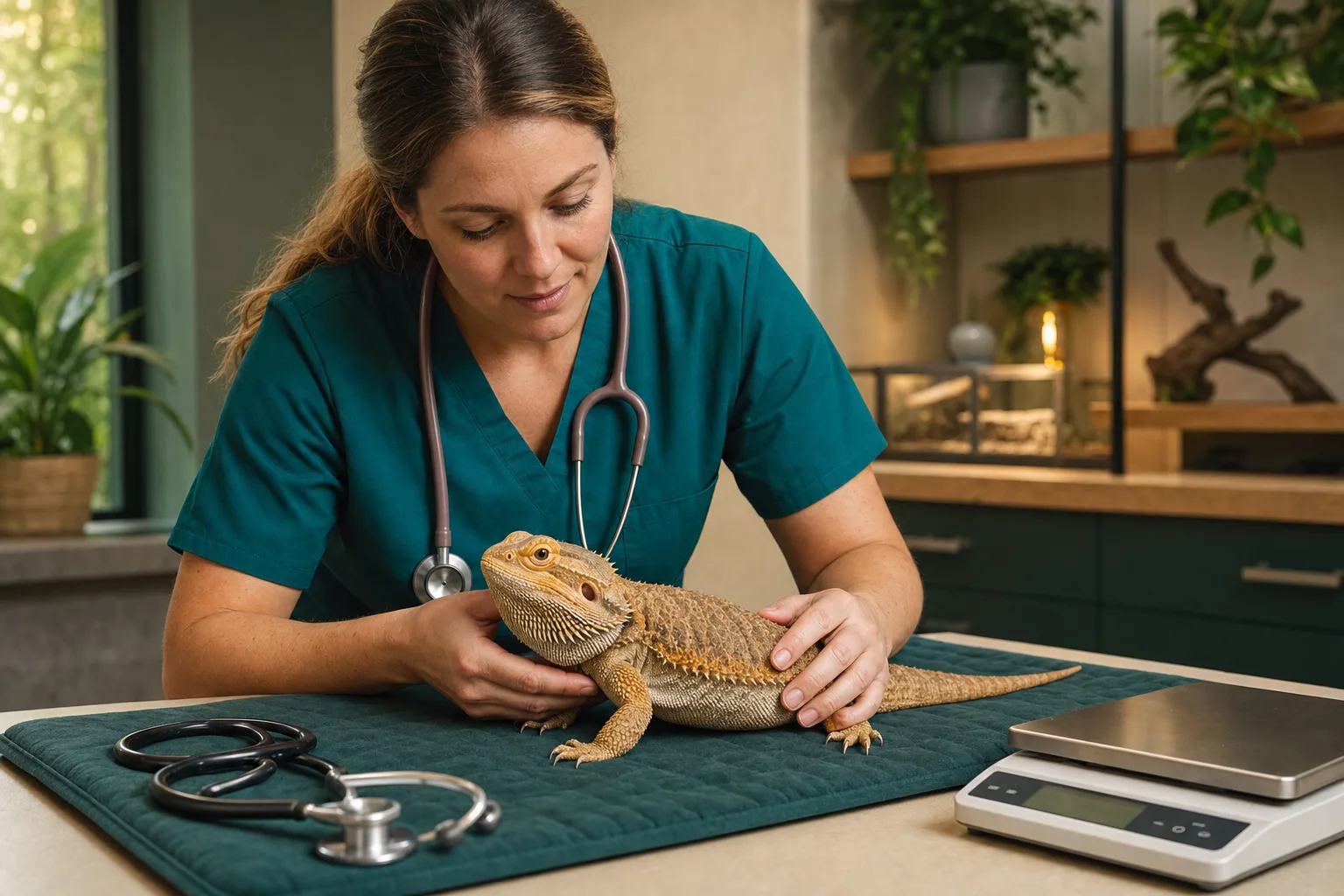
Know the routine and emergency options available before a health concern appears.

Weight, diet, habitat readings, sheds, waste, and recent changes help tell the story.

Regular observation makes changes in posture, breathing, appetite, and behavior easier to spot.
Put the plan on paper
Use this as a planning conversation, then refine it with reviewed guidance for the exact animal.
A responsible reminder
This site cannot diagnose or treat an animal. If you are concerned, contact a qualified veterinarian who has experience with the species.