
Right enclosure
Choose dimensions and orientation that support full-grown movement and behavior.
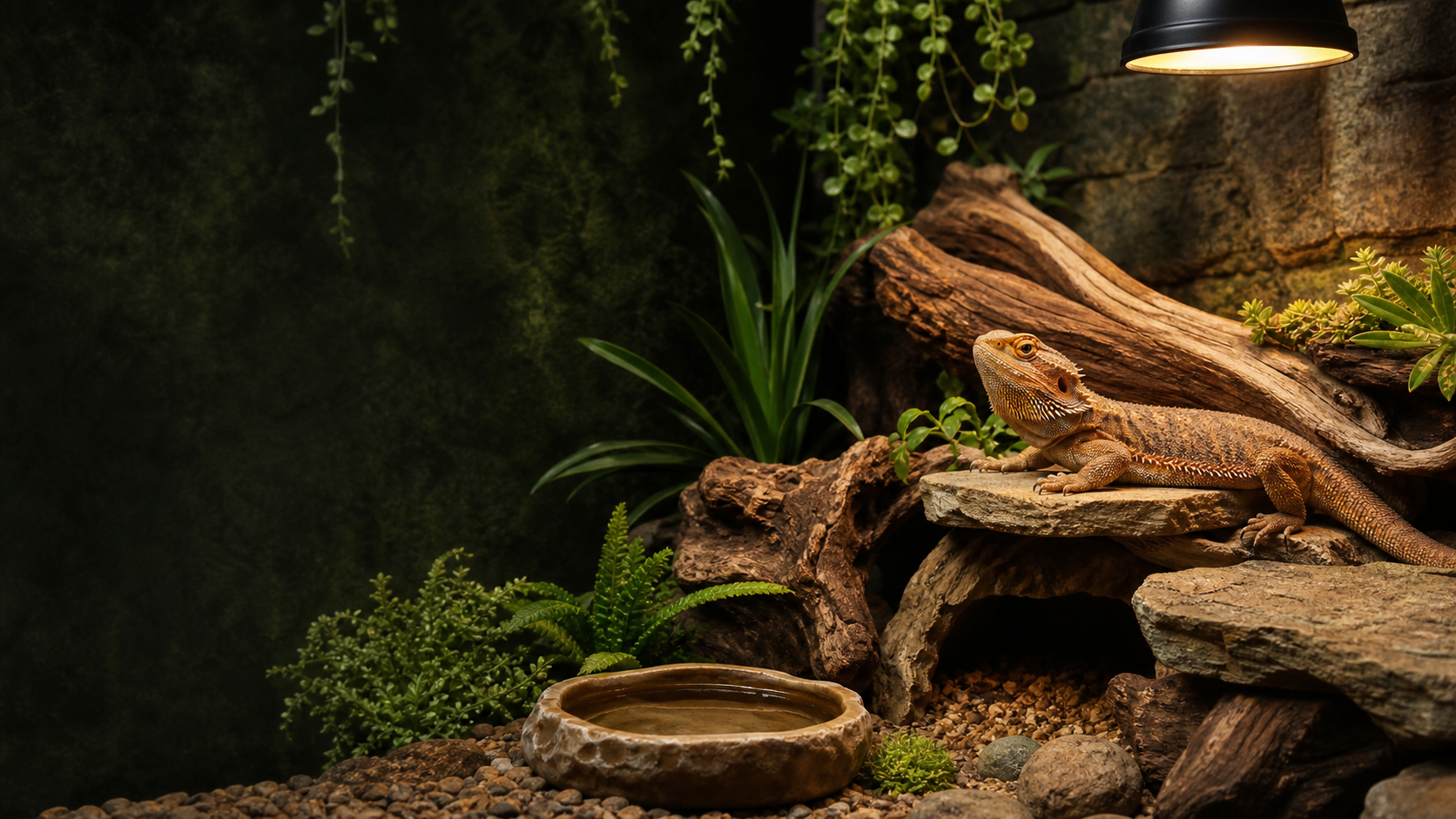
Responsible reptile ownership
Plan it. Stabilize it. Then bring them home.
A good enclosure supports natural behavior while making heat, light, humidity, hygiene, and daily observation manageable.
The care system
Start with adult size, activity pattern, climbing or burrowing behavior, climate, and cleaning needs. Then select the enclosure and equipment.
Choose dimensions and orientation that support full-grown movement and behavior.
Use appropriate heat sources with reliable thermostatic control.
Plan basking, UVB, visible light, and darkness as one system.
Balance ventilation and moisture instead of chasing a single reading.
Add safe hides, texture, climbing routes, digging areas, and visual cover.
Make daily checks and routine cleaning simple enough to sustain.
See the care system
These scenes connect the written guidance to the spaces, routines, and observations that responsible care requires.
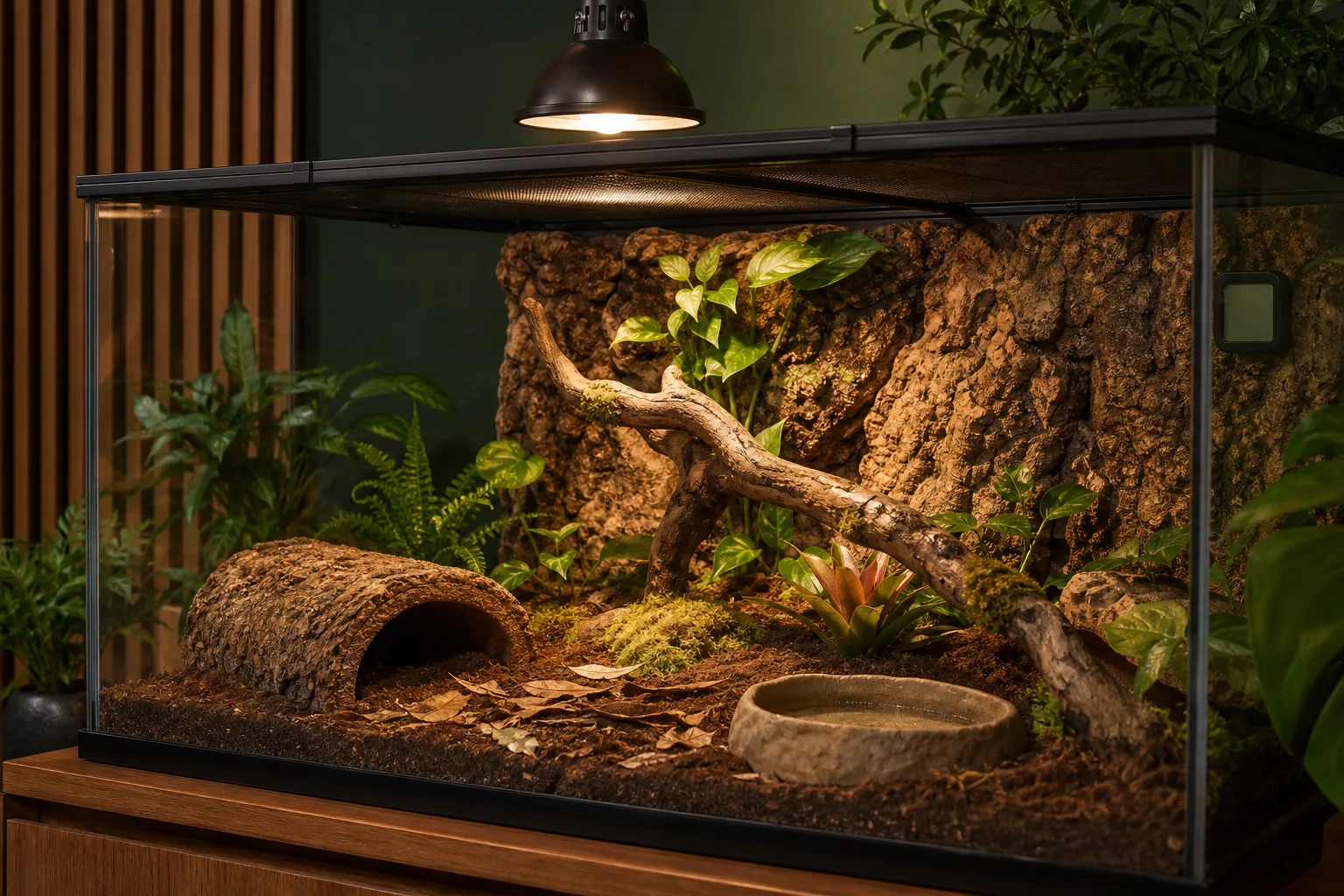
Choose the enclosure around movement, natural behavior, climate, and maintenance.
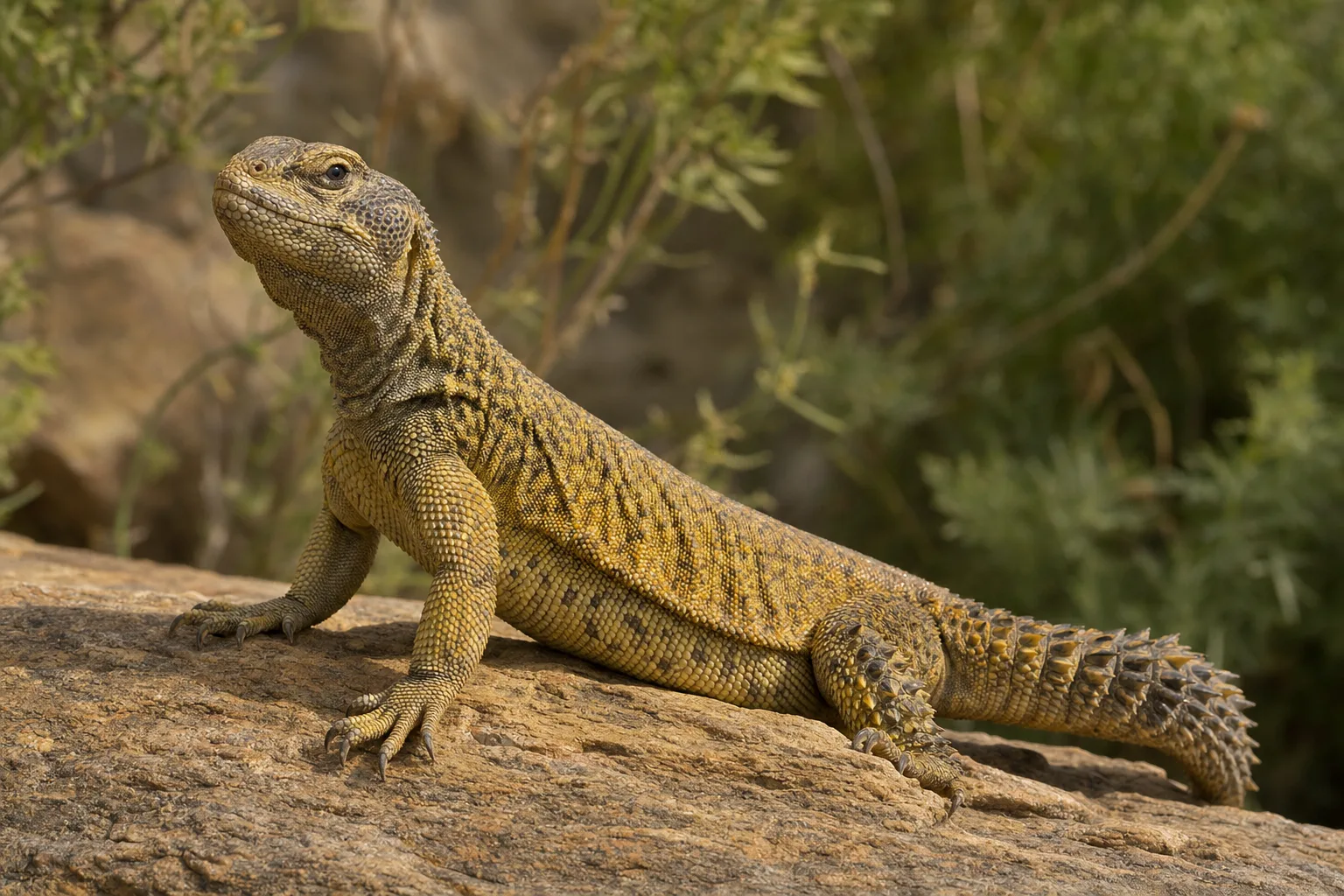
The animal needs meaningful choices between warm, cool, bright, shaded, dry, and humid areas.
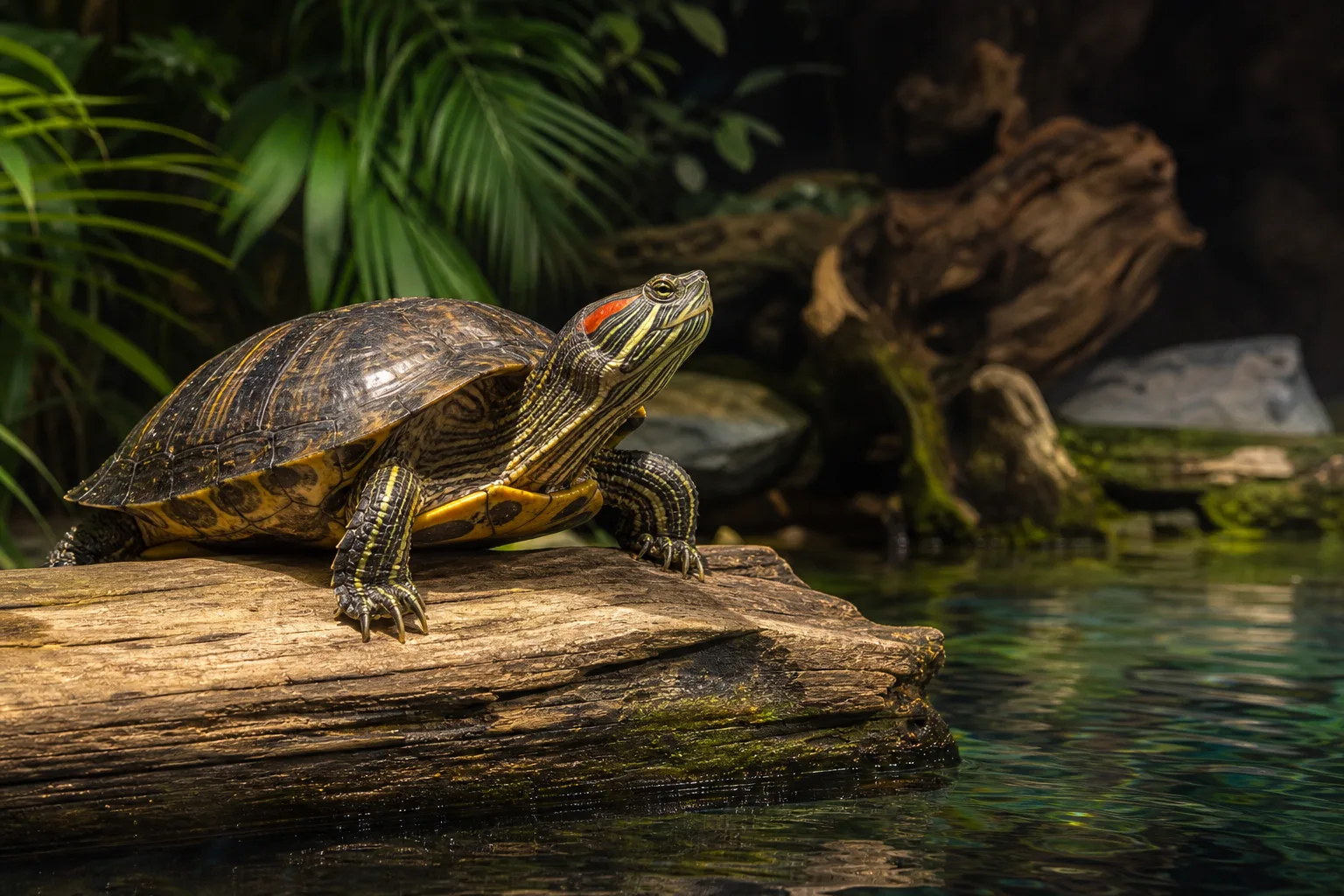
Aquatic and terrestrial habitats solve very different filtration, access, and hygiene problems.
Put the plan on paper
Use this as a planning conversation, then refine it with reviewed guidance for the exact animal.
A responsible reminder
Substrate, humidity, temperature, and lighting choices can be safe for one species and unsuitable for another. Build from a reviewed species plan.